La Cattolica di Stilo
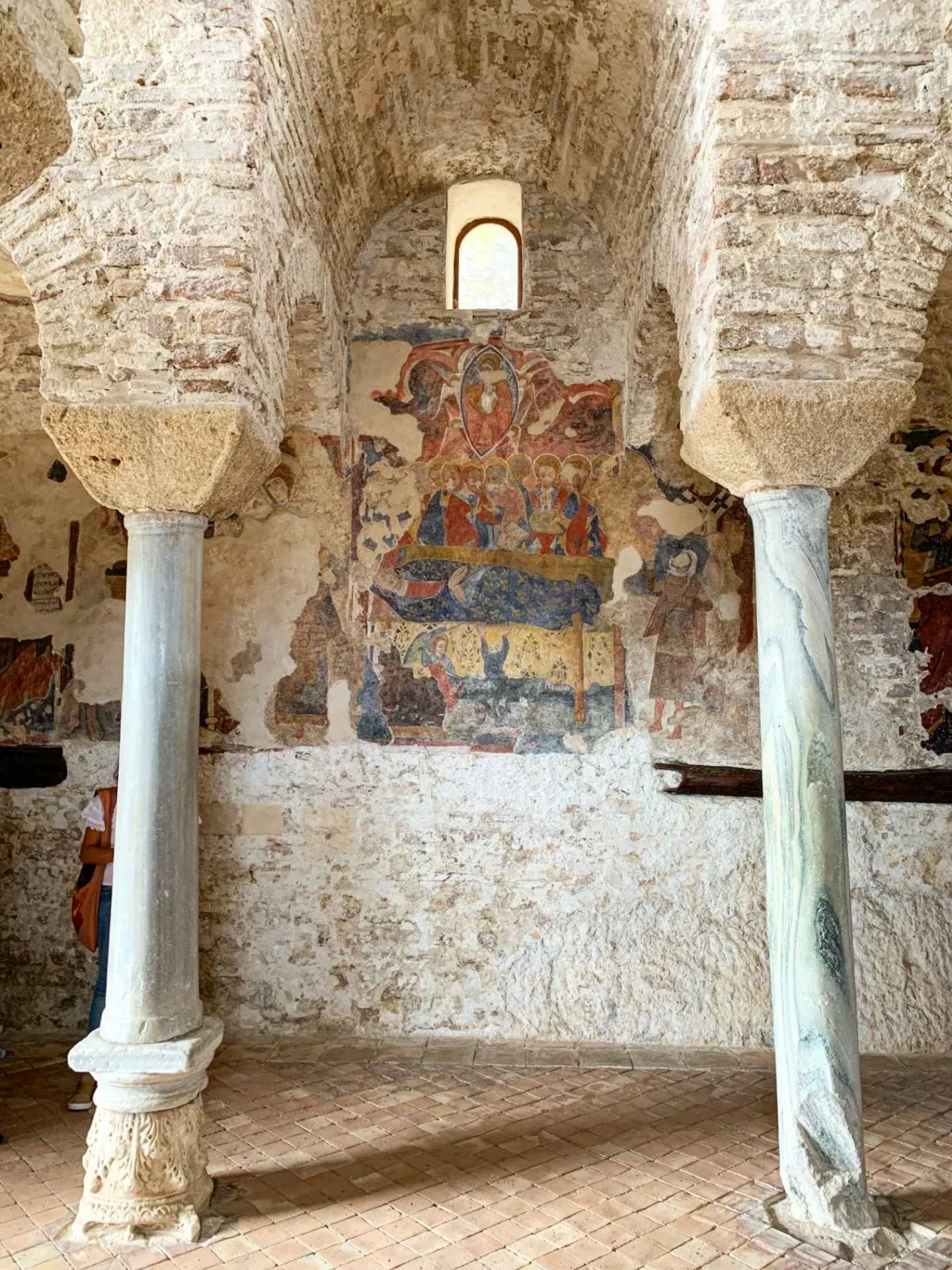
Inside La Cattolica contains an upside-down column, with an inverted Corinthian capital on the floor (left). This architectural oddity gives us a hint that many reused materials were used to build the church, and the inverted column may have been brought here from the nearby ruins of the ancient town Kaulon (present day Caulonia).
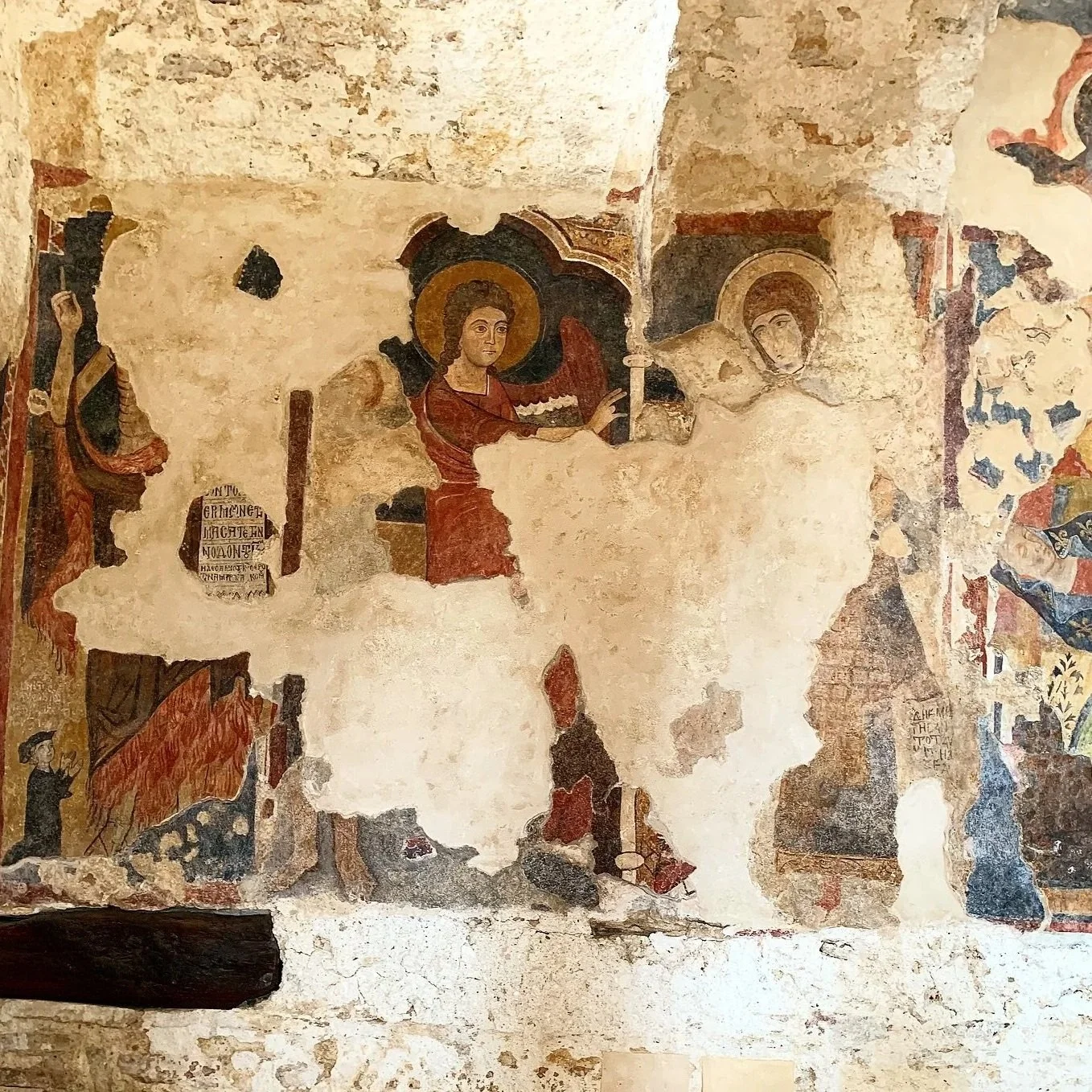
The church is filled with colorful Greek-Byzantine frescoes of saints and apostles representing the communion of believers and the continuity of the church inside La Cattolica di Stilo. Depictions are mainly theological and symbolic rather than narrative like later western Renaissance art. Holy Bishops: Saint Nicholas, Saint Basil, and Saint John Chrysostom.
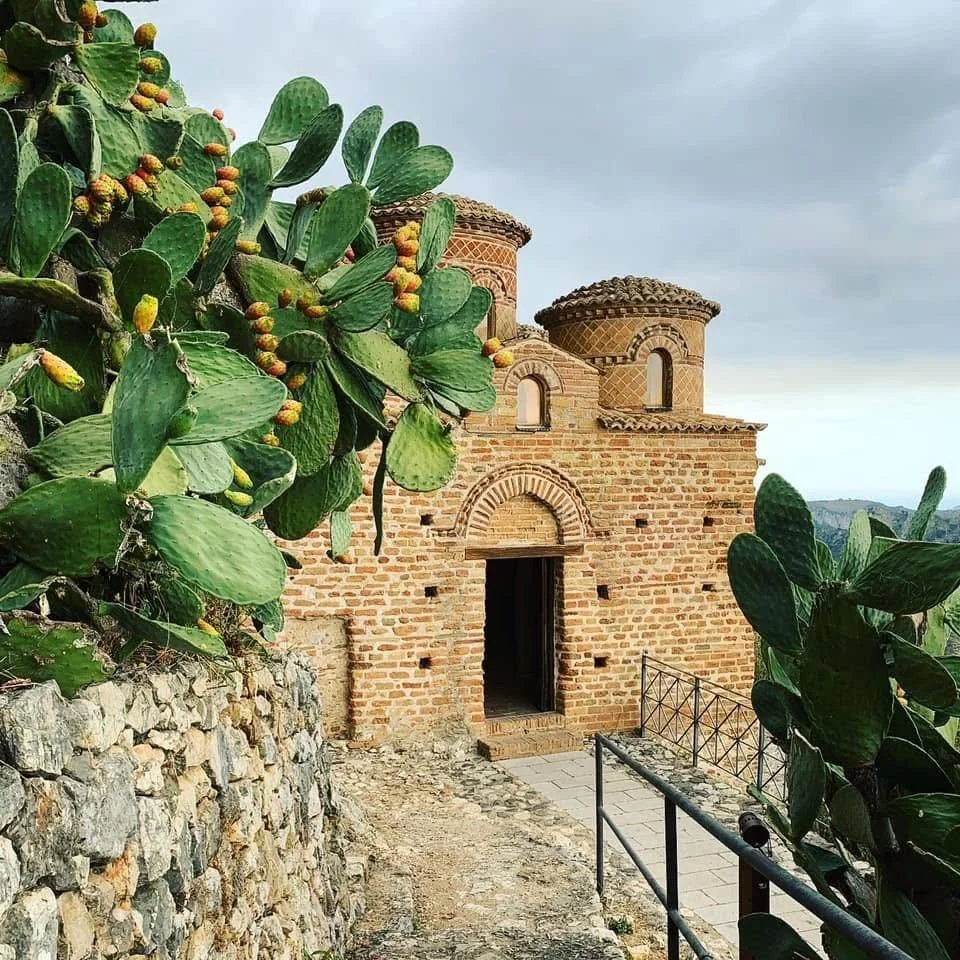
La Cattolica front entrance
La Cattolica di Stilo is not currently recognized as a UNESCO World Heritage site (although it should be), but it is on the waiting list (since 2006) as part of the "Cattolica Monastery in Stilo and Basilian-Byzantine complexes" nomination. La Cattolica is a 9th-century Byzantine church located in the province of Reggio Calabria, recognized as a culturally significant piece of architecture of the region. Byzantine architecture has a profound presence in Calabria due to the Italo-Greek culture.
The term “Cattolica” likely derives from the Greek “Katholikon,” which refers to the place of worship within the practice of monasticism (spiritual center for hermits living in the same area). The construction of the small church, founded between the late 10th and early 11th centuries, is attributed to Eastern monks who, during the final period of Byzantine rule, settled on the slopes of Mount Consolino. As was the case throughout Calabria, Stilo also benefited from the cultural enrichment brought by the Byzantine monks.
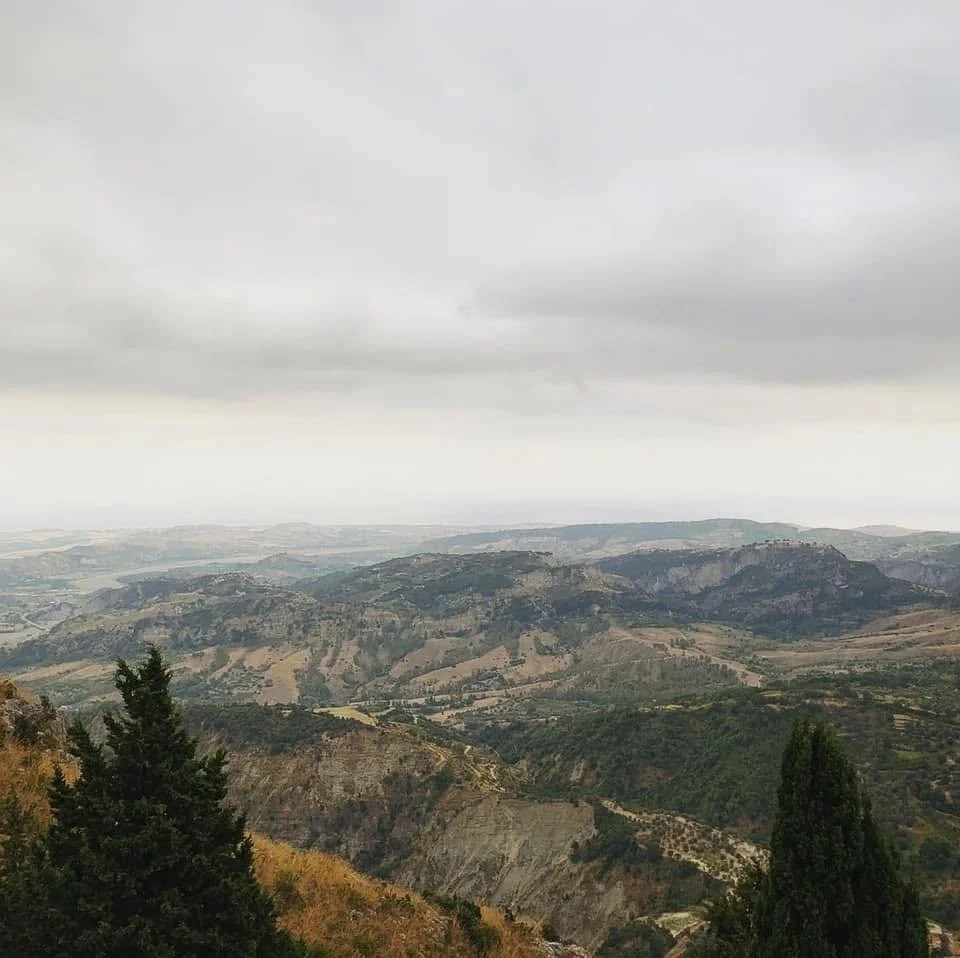
View from La Cattolica
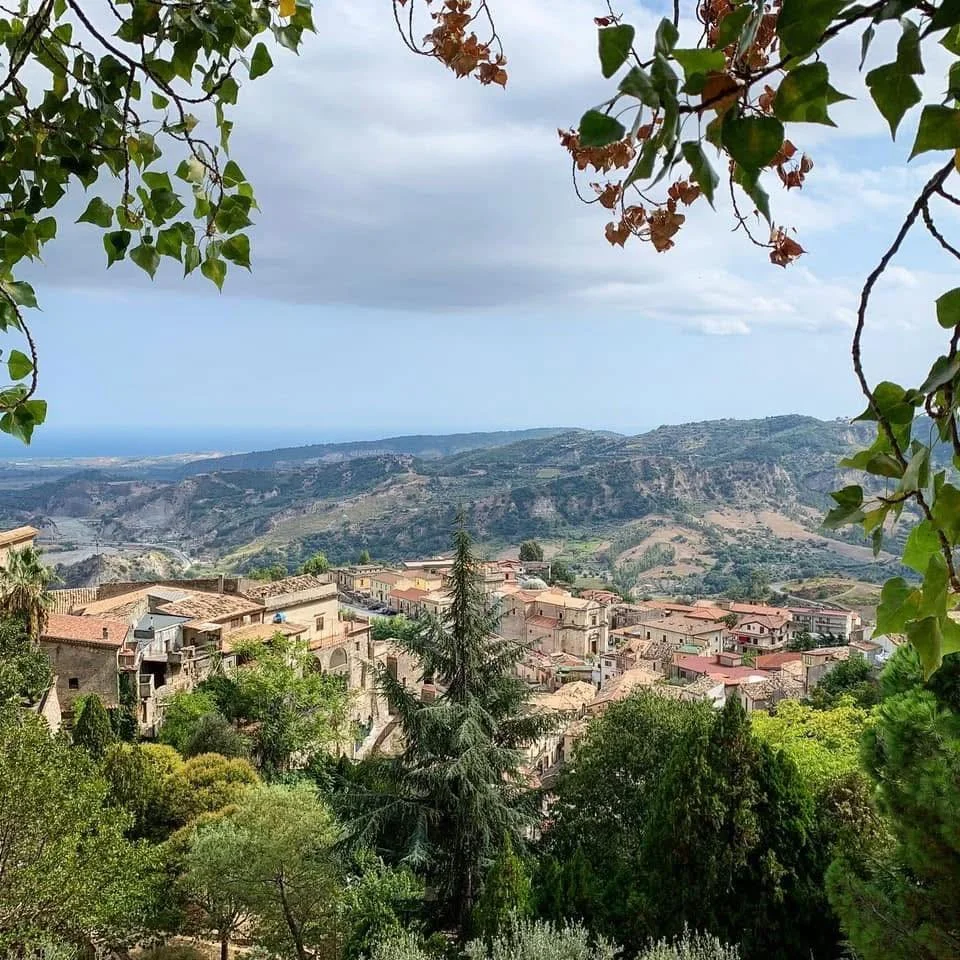
View of the hamlet of Mt Consolino just below La Cattolica
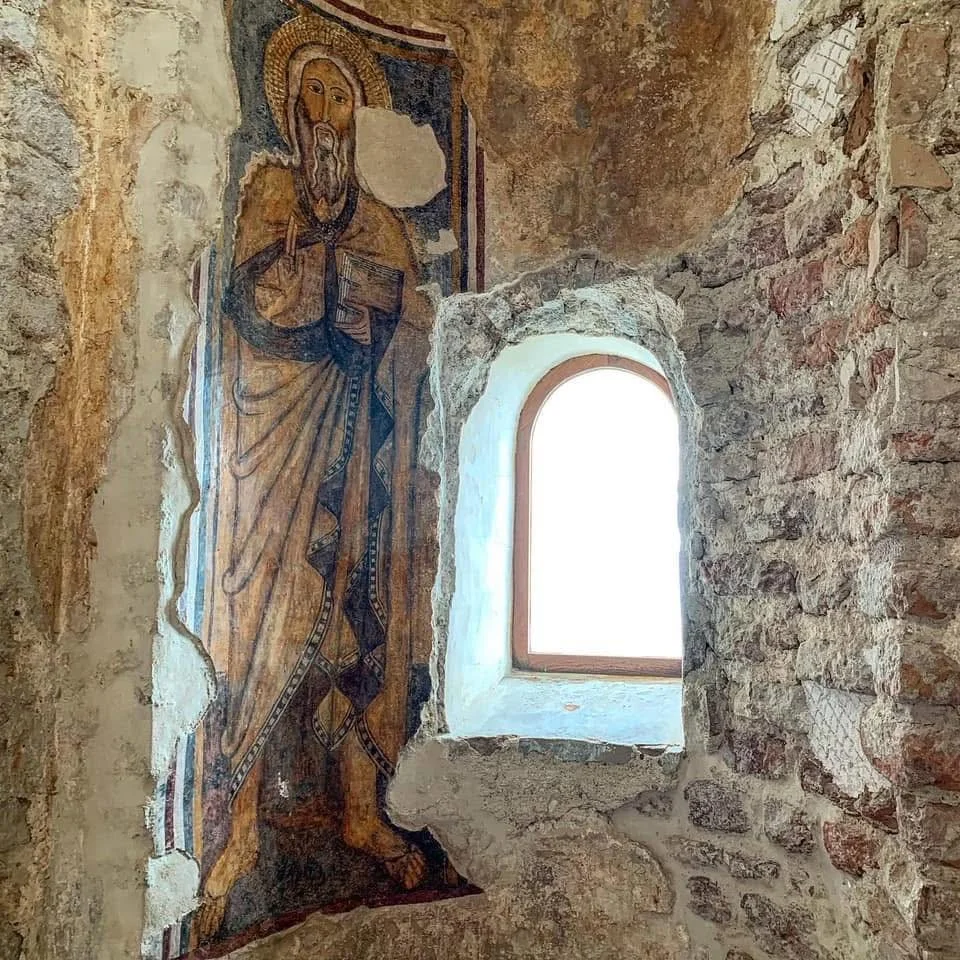
fresco
The structure’s exterior contains five cylindrical structures enclosing an equal number of small domes, and is devoid of any decoration except for the terracotta tiles covering both the drum sections and the cornices of the windows. The four slender columns supporting the drum of the central dome, likely originating from both nearby ancient Greek and Roman sites, are made of different materials and feature very distinct craftsmanship. The first column on the right is engraved with a gem-set cross and an inscription, taken from a biblical text relating to the Epiphany, which reads: deus venerandus – dominus passus – apparuit – nuper. On the first column on the left, however, there are also inscriptions in Arabic (revealed in 1997). One corresponds to the Profession of Faith, which reads: “There is no god but the One God”; the other translates literally as: “Praise be to God.” Scholars think the building may have been used temporarily as a small Muslim prayer space or mosque during periods of “Saracen” (aka Arab) presence in Calabria. Others think that the church just made heavy use of spolia (recycled ‘ancient’ parts, pieces, architecture), including an upside-down column capital. Some believe the column itself was carved elsewhere and brought in later without builders fully noting the Arabic text.
There is no grandiosity here, but rather simplicity, order, and elegance, echoing its origins—which likely date back to the monastic communities who settled here centuries ago. Aside from the simplicity of the structure’s materials—stone, mortar, brick—La Cattolica rises into harmonious forms and geometries, serving as a metaphor for the power of meditation and the search for the Divine.
Location: La Cattolica, Via Mansueto Magotti, Stilo, RC, Calabria, 89040, Italia
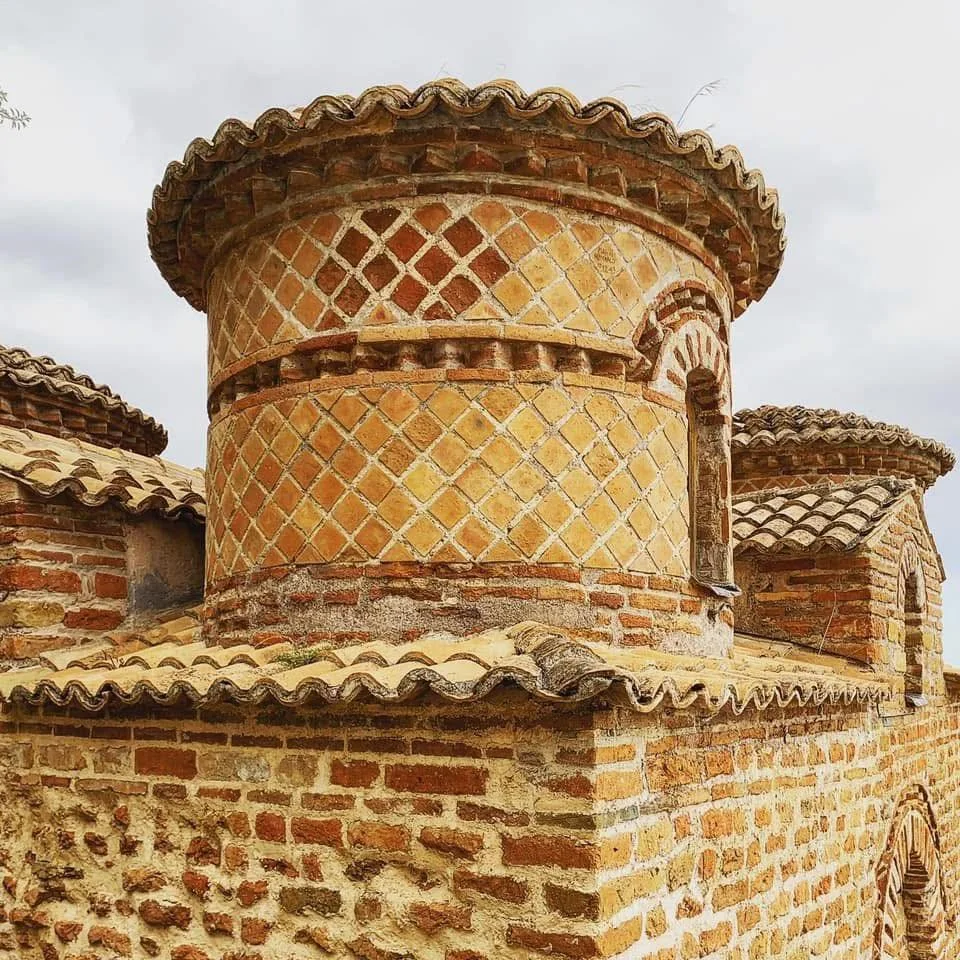
Exterior detail of the cuppola
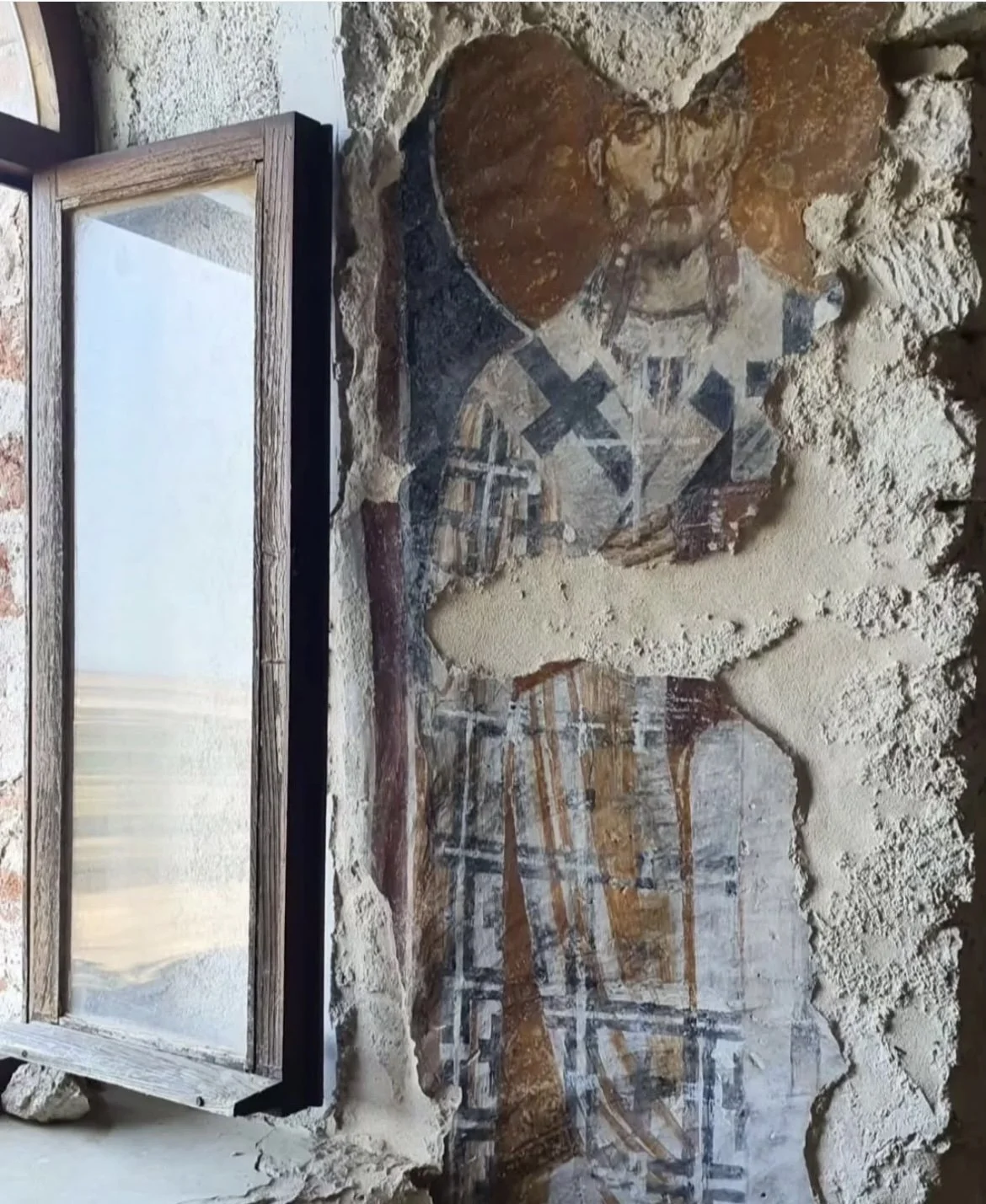
Fresco
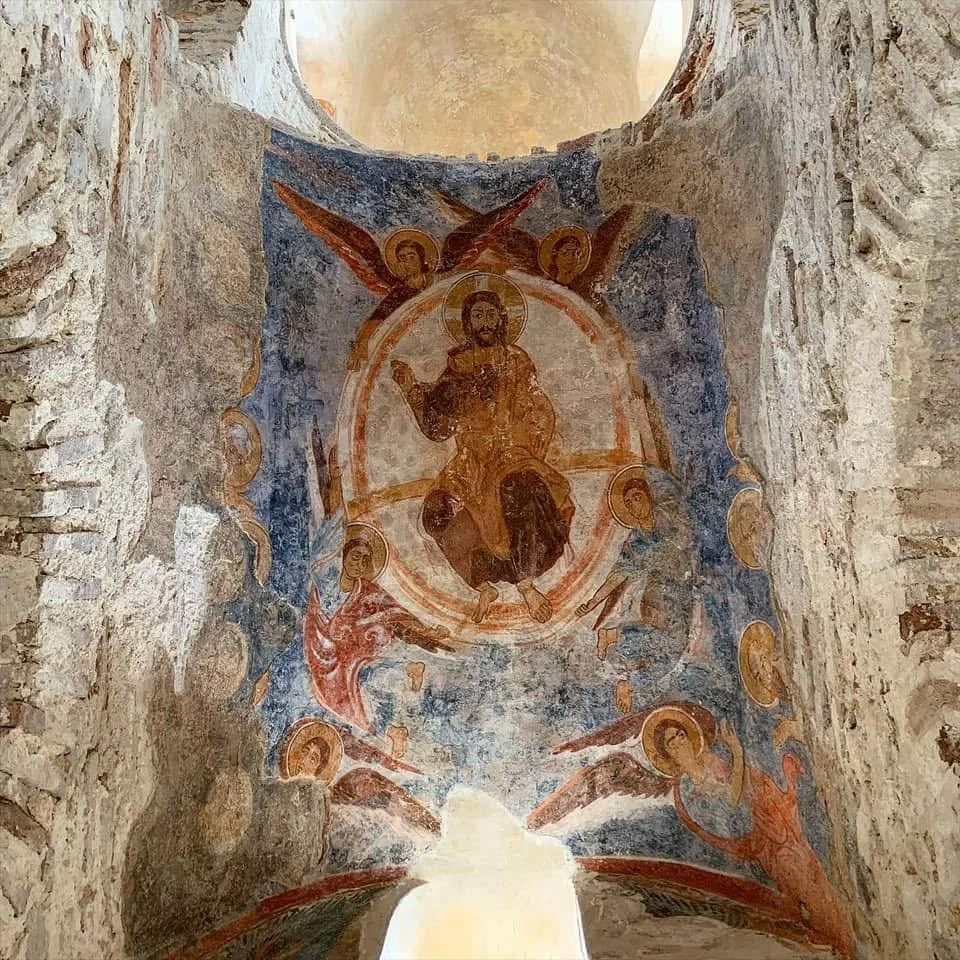
Ceiling fresco